


Lies of P Review (2026): Pinocchio's Worst Lie Was Coming to This City
- Niels Gys

- 2 days ago
- 5 min read
Quick Verdict
Lies of P is one of the best horror action RPGs of the past decade.
Not because it constantly tries to scare you.
Because it slowly convinces you that becoming human might actually be the worst thing that ever happened to this city.
If you're expecting survival horror, you'll be disappointed. This is a soulslike first. You'll spend most of your time duelling murderous puppets, learning impossible-looking boss attacks and repeatedly discovering that confidence has the lifespan of an unrefrigerated sandwich.
But horror isn't wallpaper here. It infects everything.
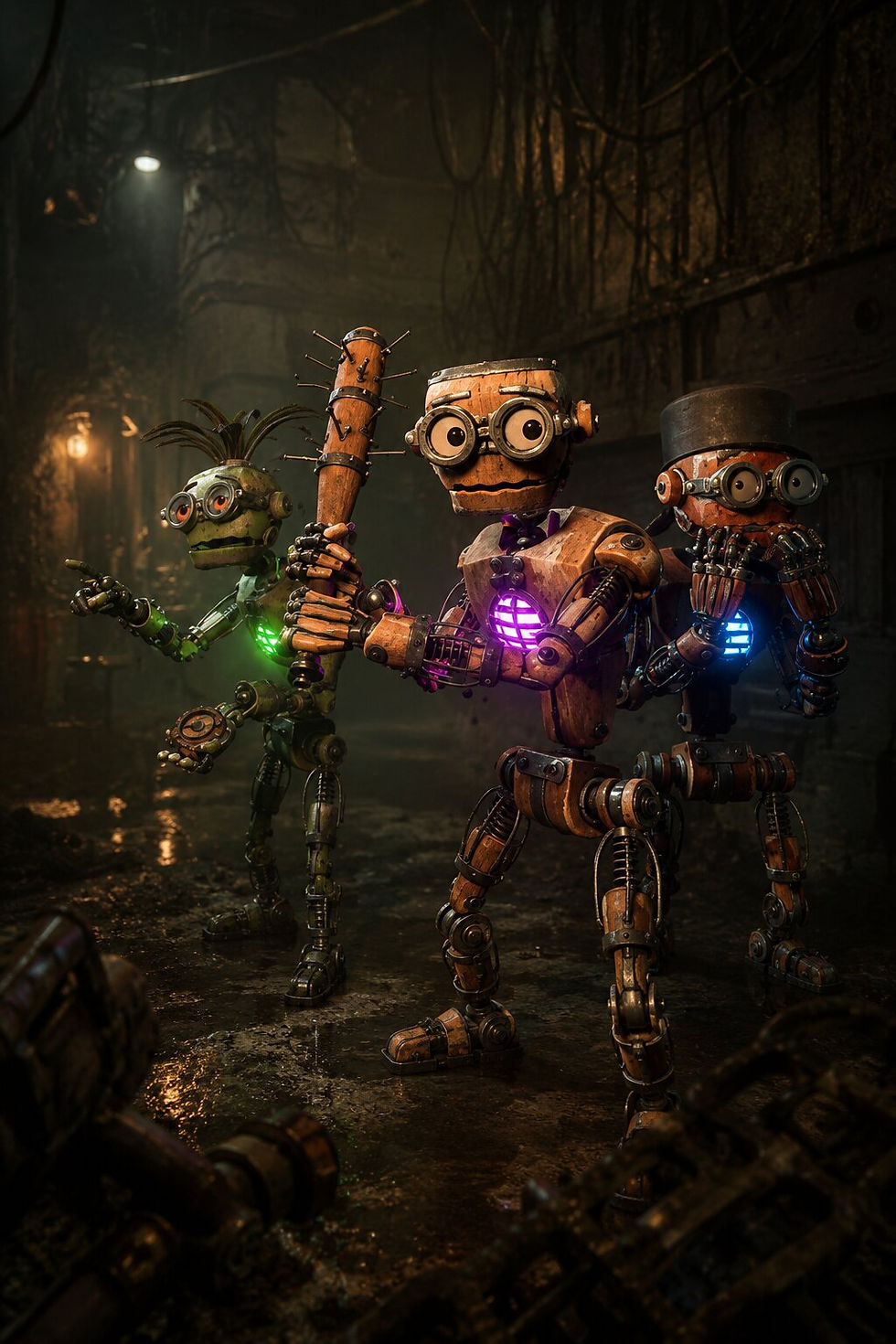
The streets of Krat don't just fall apart. They decay physically, morally and mechanically until almost every new area feels like another chapter in civilisation's very public mental breakdown.
Think Krat is disturbing? Wait until you meet the monsters that don't even pretend to be human. Our Best Horror Games roundup is packed with nightmares that make therapy sound like a sensible hobby.

Horror That Doesn't Jump Out of Cupboards
Most horror games ask:
"What if something terrifying chased you?"
Lies of P asks something much nastier:
"What if the monsters are simply the logical conclusion of human ambition?"
Everywhere you look, people tried to improve life.
Automation.
Technology.
Miracle materials.
Medical breakthroughs.
Then somebody inevitably ignored the words "maybe we shouldn't."
Now the city is overrun by homicidal puppets, people are mutating into grotesque creatures, and humanity is discovering that replacing ethics with industrial progress occasionally produces outcomes best described as "catastrophically moist."
The horror isn't random.
It's consequence.
That makes Krat feel disturbingly believable despite being populated by ballet-dancing murder robots.
The Monsters Keep Changing. That's The Problem.
The early hours lean heavily on mechanical enemies.
Clockwork policemen.
Broken servants.
Elegant puppets that clearly skipped several mandatory customer-service seminars.
They're unsettling because they're almost human.
Later, the game changes the rules.
Bodies twist.
Disease mutates people into grotesque biological nightmares.
Metal gives way to flesh.
The city gradually transforms from gothic fairy tale into industrial body horror, and it does so without announcing the genre switch with a giant flashing sign.
You simply realise, somewhere around another alley full of things that definitely shouldn't have elbows there, that Pinocchio has wandered into somebody else's nightmare.

Lies of P proves you don't need to be the villain to walk through a moral disaster. If you enjoy worlds where every bad decision snowballs into catastrophe, our Kill the Shadow review is another descent into corruption, conspiracies and people who should never have been left unsupervised.
Combat Stops You Becoming A Tourist
Beautiful horror games sometimes become museums.
You admire the scenery.
Take screenshots.
Continue walking.
Lies of P refuses.
Every street demands attention.
Combat revolves around aggressive melee fighting, precise guarding and learning enemy patterns until impossible encounters become strangely elegant dances of timing and punishment.
The weapon assembly system helps enormously.
Being able to combine many blades and handles creates meaningful experimentation instead of filling your inventory with twenty-seven swords whose main difference is whether the description says "ancient" or "very ancient."
Legion Arms add another layer without overwhelming everything.
The result feels flexible rather than chaotic.
You're never just decorating a build.
You're solving problems.
Usually by introducing several kilograms of sharpened steel to whatever biological disaster currently occupies the room.
Fear Slowly Gives Way To Respect
Lies of P isn't especially interested in making you hide.
It wants you to improve.
Eventually, the monsters that once looked impossible become readable.
Bosses stop feeling unfair and start feeling educational, in the same way being hit by a train teaches valuable lessons about railway safety.
That shift matters.
The horror evolves alongside your confidence.
The game never stops being grotesque.
It simply changes from "please don't make me fight that" into "right... let's see what fresh psychological damage you've prepared this time."
That's a much harder trick than cheap jump scares.
The Few Cracks In The Puppet
Lies of P borrows unapologetically from FromSoftware.
Sometimes it borrows so enthusiastically it feels like somebody traced Bloodborne's homework, changed enough answers to avoid detention and somehow still produced something excellent.
That familiarity is the game's biggest weakness.
It rarely surprises veterans of the genre structurally.
Enemy attack timing can also frustrate.
Several opponents delay swings just long enough to make your instincts look like they've been outsourced to a committee of drunk metronomes.
When those delayed attacks finally connect, it can feel less like losing a duel and more like arguing with somebody who keeps changing the definition of "now."
Fortunately, later updates have improved balance, accessibility and quality-of-life considerably. Multiple difficulty settings, boss rematches and numerous interface improvements have made the current version more welcoming without dismantling what made the combat satisfying in the first place.
If grotesque horror is your preferred flavour of suffering, CRIMENET's roundup of the Best Horror Games is the next logical stop. Lies of P proves monsters don't need to shout to become unforgettable. Some simply smile politely while dismantling your skeleton with Victorian manners.

Verdict
Lies of P succeeds because it understands something many horror games forget.
The monsters aren't the point.
They're the evidence.
Every puppet, mutation and impossible boss exists because people kept trying to improve the world without asking whether they should.
That turns Krat into more than another haunted city.
It becomes a crime scene where humanity is both victim and culprit.
Pinocchio wanted to become a real boy.
After spending time in Krat, you start wondering whether wood had the better deal.
Every week, This Week in CRIME rounds up the biggest criminal opportunities in gaming, from GTA fortunes worth stealing to horror games, villainy and industry disasters deserving a public roasting. It's the underworld briefing your Steam library never asked for but desperately needs.
If CRIMENET keeps saving you from bad purchases and worse life choices, there's always Ko-fi. We promise to spend it on journalism, not suspicious puppet manufacturing.
Lies of P FAQ
Is Lies of P actually scary?
Yes, but not in the jump-scare sense. It's a gothic action horror game filled with grotesque monsters, disturbing body horror and an oppressive atmosphere. The horror comes from the world and its creatures as much as the combat.
Is Lies of P harder than Elden Ring?
It depends on your playstyle. Many players find its precise guarding system and aggressive bosses more demanding than Elden Ring, especially early on.
Do you play as a villain in Lies of P?
No. Despite the dark setting, you play as Pinocchio, trying to uncover the truth behind Krat's collapse. Your choices can be morally complex, but the game doesn't let you embrace a true villain fantasy.
Is Lies of P worth playing in 2026?
Absolutely. Years of updates have improved balance, accessibility and quality of life, making it one of the strongest non-FromSoftware Soulslikes available today.
How long does it take to beat Lies of P?
Most first playthroughs take around 30 to 40 hours, with additional endings, New Game+, and the Overture expansion offering plenty of reasons to return.



Comments