
Scavland: How Much of an Outlaw Can You Actually Be?

Not much, at least not from what Scavland has actually proven so far.
Scavland absolutely lets you live like an armed wasteland scavenger. You take jobs, deal with competing factions, build reputation, loot whatever civilisation forgot to nail down, trade supplies, customise weapons and venture into places where "health and safety inspection" presumably means checking whether the mutant has finished eating the previous inspector.
What it has not yet demonstrated is the thing that would turn all of this into a proper outlaw sandbox: meaningful crime.
You can be a Vulture. You can be a mercenary. You can make friends and enemies.
Whether you can become an absolute bastard remains another matter.
Want more games where being a respectable citizen is clearly a failure state? CRIMENET’s Best Crime Games digs through the finest ways to make fictional society regret giving you free will.
Scavland Has All the Ingredients for an Outlaw RPG
Scavland entered Early Access on September 4 with ten factions, jobs and contracts, a reputation system, traders, hostile survivors, stealth, weapon customisation and an open post-apocalyptic region called Zalesye.
On paper, that sounds enormously promising.
The basic survival loop already puts you in the right neighbourhood. You prepare for an expedition, head into dangerous territory, scavenge resources, fight humans and mutants, explore underground bunkers and hopefully return with enough valuable crap to justify having risked becoming something else's valuable crap.
Then there are the factions.
Your relationships with different groups matter. Building reputation can change how you're treated and open additional items and opportunities. Jobs give you reasons to work with these groups rather than simply encountering them as differently dressed varieties of target practice.
That's where Scavland becomes interesting from a criminal perspective.
Because the machinery required for a brilliant outlaw RPG appears to be sitting right there.
Reputation. Competing factions. Stealth. Valuable resources. Traders. Armed humans. Jobs. Choices.
It's basically left the ingredients for organised crime unattended on the kitchen counter.
Unfortunately, owning flour doesn't mean you've made a cake.
Being a Mercenary Isn't the Same as Being a Criminal
This distinction matters because games bloody love calling you an outlaw while employing you as the most dependable public servant in the county.
Give a protagonist a dirty jacket, three days of stubble and an assault rifle held together with electrical tape and suddenly everyone starts behaving as though Pablo Escobar has entered the building.
But what are you actually doing?
In Scavland, the verified fantasy is surviving through scavenging, exploration, dangerous work and faction relationships. That's a perfectly good foundation, and being a Vulture certainly isn't respectable employment. You are not clocking into the Zalesye branch of Deloitte every morning with a reusable coffee cup.
But CRIMENET's criminal test requires more than looking unemployable.
The important questions are whether you can steal from people who aren't already designated loot dispensers. Whether attacking friendly or neutral survivors has consequences. Whether you can deliberately destroy a faction relationship, betray somebody you've worked for or throw your support behind the wasteland equivalent of three men called Boris operating from a burnt-out petrol station.
Those are the systems that transform reputation from RPG bookkeeping into criminal freedom.
And right now, Scavland hasn't proven them.
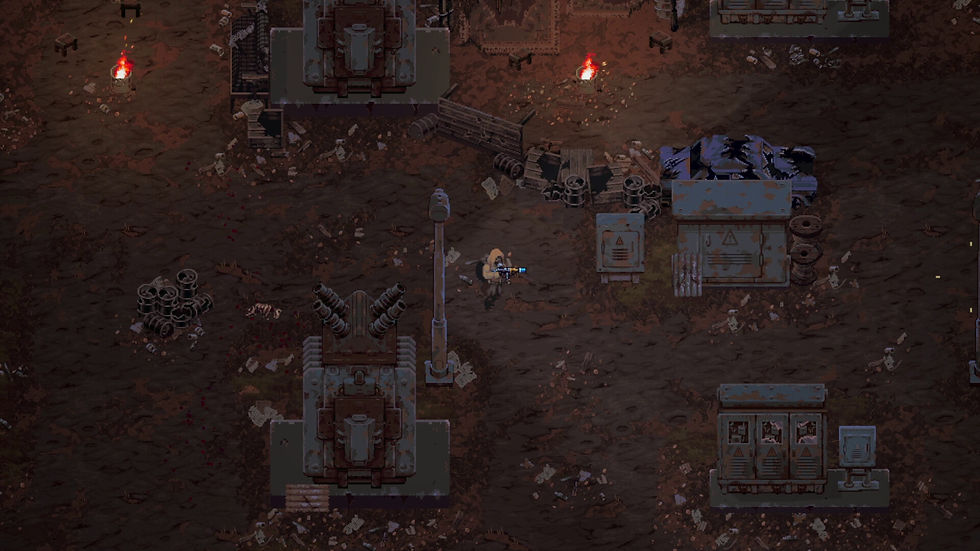
Scavland is still deciding whether you’re an outlaw or just a freelancer with an assault rifle. See the games that actually let you cross the line in CRIMENET’s playable-villain coverage.
Reputation Could Be Where Scavland Gets Properly Interesting
This is the system worth watching most closely.
Faction reputation already affects relationships and opportunities. That's meaningful because it potentially gives your behaviour a social cost. A world becomes much more interesting when shooting somebody isn't simply combat but a career decision.
Imagine working for one faction until you've unlocked its useful traders, deciding another group has nicer toys, betraying your former employers and discovering that half of Zalesye now considers your skull a collectible.
That's an outlaw story generated by systems rather than a dialogue box asking:
GOOD: Save the orphanage
EVIL: Set fire to the orphanage
SARCASTIC: Ask whether the orphanage validates parking
But that glorious administrative collapse is still hypothetical.
We know reputation matters. We know factions matter. We know choices affect how groups treat you.
We do not yet know whether Scavland lets those systems go properly feral.
If negative reputation mostly means "Trader Sergei will no longer sell you the blue magazine," that's considerably less exciting than becoming persona non grata because you spent Tuesday systematically ruining Sergei's entire organisation.
The difference is enormous.
One is reputation management.
The other is consequences.
And Where's the Actual Crime?
This is currently Scavland's biggest missing piece.
There is no sufficiently established evidence yet of a proper theft system, stolen-goods economy, black market, robbery mechanics or faction betrayal system.
That doesn't mean those things definitely aren't present. Scavland has only just entered Early Access, and some of its deeper systemic behaviour remains unclear.
It means we shouldn't pretend they exist because they'd fit beautifully.
And Christ, would they fit beautifully.
Scavenging already makes objects valuable. Survival makes supplies important. Factions give property potential owners. Reputation gives bad behaviour potential consequences. Stealth provides a way to commit bad behaviour without immediately turning the village into an unscheduled firearms convention.
You can practically see the crime system-shaped hole.
Let me sneak into a settlement and steal ammunition.
Let me sell somebody else's equipment to their rival.
Let me murder a trader and discover that this was economically unwise because apparently the dead man was the only person within 40 kilometres who knew what a screwdriver was.
Let factions remember it.
Now we're cooking.
Without that layer, you're primarily scavenging from a ruined world and fighting people already hostile to you. That's dangerous, violent and wonderfully grubby, but it isn't automatically crime. Taking a rifle from a corpse that tried to ventilate your kidneys thirty seconds earlier is less "career criminal" and more "aggressive recycling."

Prefer crimes with planning, disguises and several million reasons for everything to go catastrophically wrong? Head into CRIMENET’s Best Heist Games.
So, Can You Be an Outlaw in Scavland?
Not convincingly yet.
What Scavland currently supports is the fantasy of an armed scavenger navigating a dangerous world of factions, jobs, reputation, scarce resources and questionable employment prospects.
That's close enough to outlaw territory to be fascinating.
But close isn't the same thing.
The real test is whether Scavland allows you to turn its faction and reputation systems against the social order instead of merely progressing through them. Theft, betrayal, deliberate hostility, criminal trading and meaningful consequences would completely change the answer.
Until those systems are demonstrated, calling Scavland a proper outlaw RPG would be handing it a criminal record for offences it hasn't actually committed.
For now, you're not the wasteland's kingpin.
You're an extremely well-armed freelancer with terrible working conditions.
Scavland FAQ
Can you play as an outlaw in Scavland?
Not fully, at least based on what is currently verified. You can take jobs, scavenge, fight hostile survivors and build relationships with competing factions, but meaningful theft, robbery and criminal progression haven't been established yet.
Does Scavland have factions?
Yes. Scavland's Early Access build features ten factions alongside a reputation system that affects relationships and available opportunities.
Can you steal from NPCs in Scavland?
It's currently unclear. Scavenging and looting are major mechanics, but a proper theft system involving neutral NPCs, traders or faction property hasn't been reliably confirmed.
Can you betray factions in Scavland?
Faction choices and reputation matter, but the extent to which you can deliberately betray allies or become an enemy of former factions remains unclear.
Is Scavland a crime game?
Not really, at least not yet. Right now it's better described as a post-apocalyptic survival RPG with mercenary and outlaw-adjacent systems rather than a full criminal sandbox.


Comments