


Dirty Business Review: Breaking Bad Meets Warehouse Management
- Niels Gys

- 14 hours ago
- 9 min read
Quick Verdict
Dirty Business is one of the purest criminal empire simulators around. Unfortunately, before you're allowed to become Pablo Escobar, the game occasionally insists you spend several hours being Pablo From Warehousing.
You manufacture drugs, counterfeit currency and weapons. You hire workers and street dealers. You move contraband through front companies. You expand an underground headquarters until your modest criminal workshop starts resembling Amazon if Jeff Bezos had discovered narcotics instead of next-day delivery.
And the important bit: the crime is real gameplay.
Dirty Business doesn't call you an outlaw and then send you into the forest to rescue twelve chickens. Your job is to build an increasingly large and efficient criminal organisation. Crime isn't seasoning sprinkled over a management game. Crime is the management game.
The problem is that its Early Access machinery hasn't entirely caught up with that magnificent premise.
Manual production can become grindy, automation takes time to arrive, workers have caused frustration, co-op has problems, and bugs and building restrictions occasionally turn criminal entrepreneurship into an argument with industrial furniture.
Recommended for crime-management addicts willing to tolerate Early Access roughness. Everyone else should keep it under surveillance while the developers continue patching it.
Finished building your respectable underground narcotics corporation? The GTA Online Weekly Grind has this week's criminal opportunities ranked by how much money they make and how little dignity they require. Go steal something with a better quarterly return.
What Dirty Business Actually Is
Dirty Business is a first-person criminal-enterprise management game about building an illegal operation beneath a city.
The important word is management.
This isn't GTA with spreadsheets. It isn't Payday with a warehouse. Combat exists, but isn't the main attraction.
You're building infrastructure.
Your underground headquarters produces illegal substances, counterfeit currencies and weapons.
Workers eventually automate production. Street dealers handle local sales. Larger orders graduate from the humble elevator to front-company vehicles and eventually much larger distribution infrastructure.
Dirty Business asks the question most crime games mysteriously avoid:
What happens after somebody says, "Let's build a criminal empire"?
Logistics.
Fucking logistics.
Organised crime has defeated morality, law and several international conventions, only to discover nobody escapes supply-chain management.
From Criminal Mastermind To Unpaid Employee
The early game is considerably less Scarface than the premise suggests.
Production initially requires substantial manual involvement. You make products, fulfil orders, earn money, expand the operation and gradually unlock the workforce required to stop personally hovering over every bloody stage of your criminal economy.
At first, you're the founder, factory worker, logistics department and criminal mastermind simultaneously.
Imagine Tony Montana reaching the top of the cocaine trade and then discovering nobody has been scheduled for Tuesday's afternoon shift.
That's the central progression of Dirty Business.
Eventually, workers automate growing and production while dealers move product. Larger shipments unlock more sophisticated distribution methods. Your personal workload begins turning into infrastructure.
And that's when the game gets its claws in.
You're no longer simply committing crimes.
You're building a machine that commits them for you.
Lots of crime games let you steal a car. Dirty Business wants you to reach the point where personally stealing the car would represent a catastrophic misuse of executive time.
That is proper villain progression.

Yes, The Criminal Empire Fantasy Is Absolutely Real
This is where Dirty Business earns its CRIMENET badge with alarming efficiency.
Illegal production, criminal economics, workers, dealers and distribution aren't decorative bollocks pasted onto an ordinary management game.
They're the game.
Progression rewards becoming better at crime because becoming better at crime is progression. Produce more contraband. Improve production. Automate work. Expand distribution. Make more money.
There isn't a heroic justification hiding behind the warehouse.
You're running the warehouse.
That makes Dirty Business a natural fit for CRIMENET's Best Crime Games To Play Right Now coverage. Your villainy isn't Evil Dialogue Option B, where you refuse to rescue the orphan and receive three Sin Points.
You're manufacturing narcotics, illegal weapons and counterfeit money at industrial scale because the business plan says growth was disappointing last quarter.
You aren't defeating the criminal empire.
You're wondering whether HR has found another dealer yet.
What Works: Watching Crime Become Industry
Dirty Business has one genuinely brilliant idea:
Scale changes the fantasy.
Producing contraband yourself feels like committing crime.
Hiring somebody to produce it feels like running crime.
Automating production while dealers distribute it feels like you've built an actual criminal economy.
That transition is the drug underneath all the other drugs.
Numbers stop representing abstract progression and begin representing freedom from work.
A new employee means one less miserable task demanding your attention. Better distribution changes how much product the organisation can move. A larger headquarters means the operation can become more ambitious.
It's the same diseased pleasure that makes factory-game players whisper about conveyor-belt efficiency at three in the morning, except Dirty Business replaces industrial widgets with products likely to make several government agencies kick your door through the opposite wall.
You're not optimising a factory.
You're industrialising bad decisions.
And it works.
Before You're Escobar, You're Pablo From Warehousing
Then comes the grind.
Several Steam reviewers argue meaningful automation arrives too slowly, leaving substantial manual production during earlier progression.
This is Dirty Business's biggest current problem because it attacks the fantasy directly.
The game says:
CRIMINAL KINGPIN.
Your workload says:
Congratulations on completing your probationary period. Please remember to clock out.
Some manual labour makes sense. Automation becomes satisfying precisely because you remember doing all this crap yourself.
But there's a limit.
If I'm building a criminal empire, progression should gradually make me feel more powerful. When the owner of an expanding underground organisation is still personally doing repetitive production because the staffing systems haven't caught up, the fantasy starts leaking oil onto the carpet.
You stop thinking:
"Soon I shall control this city's criminal economy."
And start thinking:
"WHY AM I STILL DOING THIS? I OWN THE FUCKING BUILDING."
The empire is the reward.
Getting there currently risks feeling like you've accidentally been employed by it.
Workers Save Your Sanity, Assuming They Remember Their Jobs
Workers should be the glorious moment Dirty Business opens up.
Employees take over repetitive production. Your attention moves towards expansion, organisation and larger decisions.
Wonderful.
Except worker behaviour is also one of the recurring Early Access complaints.
Players have reported problems with automation, task completion and awkward management.
That's not some tiny cosmetic inconvenience in a game built around delegation. That's like discovering the steering wheel in a racing game occasionally needs encouragement.
If your grand criminal empire requires you to walk around checking whether everybody remembered the jobs you already assigned them, you haven't automated organised crime.
You've become a regional manager.
The developers have already released multiple updates addressing worker behaviour, repeating tasks, bugs and quality-of-life problems. One Steam reviewer even changed their recommendation after an update addressed a major automation complaint.
So don't tattoo this criticism onto the game's gravestone.
Dirty Business's workforce isn't finished.
They're currently repairing the aircraft while everyone is still sitting in it.
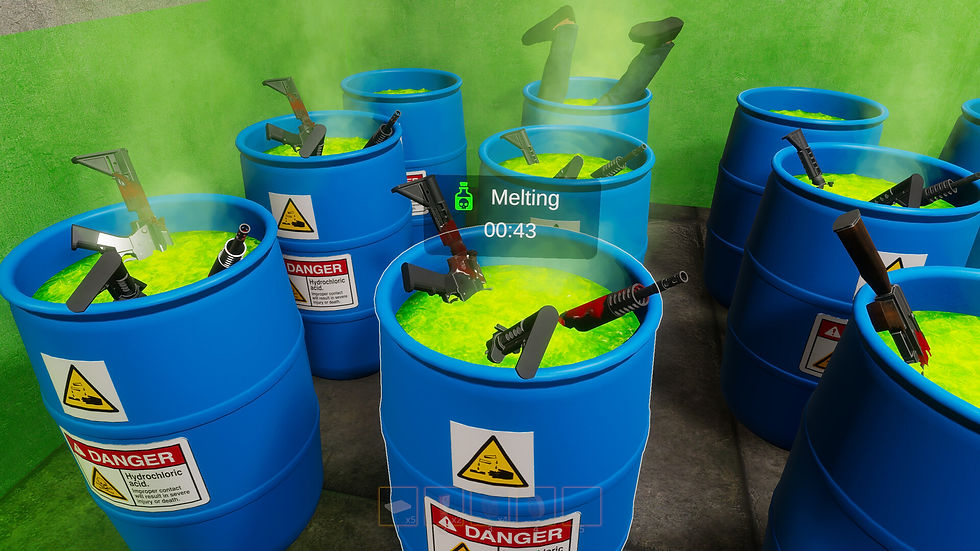
Distribution Is Where Dirty Business Starts Feeling Dangerous
Distribution is one of the best parts of the criminal-business fantasy.
Small orders can move through the surface elevator. Larger quantities graduate to front-company vehicles. Street dealers automate local sales. Eventually, much larger shipments gain access to cartel-scale infrastructure.
That's progression done properly.
The numbers get bigger, yes, but more importantly your organisation becomes capable of bigger things.
And front-company transport is such a wonderfully mundane criminal detail.
People imagine criminal empires as gold-plated mansions, mountains of cash and armed psychopaths standing beside swimming pools.
Reality eventually arrives wearing a polo shirt and asks whether you've considered fleet logistics.
You haven't truly conquered organised crime until your biggest concern is whether the suspiciously legitimate van can handle distribution.
Somewhere, an accountant is sweating through his collar.

No, This Isn't A Heist Game
One expectation needs shooting behind the warehouse.
Dirty Business is not a heist game.
Current evidence doesn't establish meaningful robbery, burglary or elaborate theft gameplay. The criminal fantasy here is manufacturing, management and distribution.
That's not a weakness unless you came looking for vaults, getaway cars and increasingly elaborate plans ruined by Kevin refusing to follow instructions.
For that, CRIMENET's Best Heist Games coverage is the better criminal rabbit hole.
Dirty Business belongs to another family.
You're not Danny Ocean.
You're the deeply concerning corporation Danny Ocean sells things to afterwards.
Co-op Currently Needs Witness Protection
Dirty Business supports online co-op for up to four players.
Conceptually, that's perfect.
One person handles production. Another manages expansion. Someone deals with distribution. The fourth reorganises the furniture for forty minutes because every criminal organisation eventually acquires one employee with very strong opinions about shelving.
Unfortunately, current player reports describe multiplayer problems including tutorial conflicts and interaction issues.
So while the potential is obvious, co-op currently deserves a large EARLY ACCESS sticker slapped across its forehead.
It's there.
It can work.
It just isn't the polished centrepiece you should buy the game specifically for yet.
Bugs, Building Restrictions And Other Crimes Against Management
Dirty Business is unmistakably Early Access.
Players have reported crashes, tutorial progression problems, awkward building restrictions, inventory-management friction, worker problems and optimisation concerns.
Some of those hurt more than others.
Building restrictions matter because designing an efficient underground operation is part of the fantasy. If placing and organising your production floor becomes unnecessarily awkward, you're no longer wrestling with criminal logistics.
You're fighting the furniture.
There is something magnificently pathetic about constructing an international criminal enterprise capable of manufacturing narcotics and weapons, only to be defeated because apparently the table cannot go there.
The good news is that the developers are moving.
Multiple patches landed within days of release targeting bugs, workers and quality-of-life improvements.
That doesn't magically erase the problems.
It means Dirty Business is changing quickly enough that today's infuriating problem could become next month's "remember when this bloody thing did that?"
Treat every Early Access complaint accordingly.
The Community Verdict: Great Idea, Finish The Machinery
Steam reception is currently Mostly Positive, with roughly three-quarters of Steam-purchaser reviews recommending the game during its launch week.
That feels exactly right.
Players clearly see something here.
The criminal-management premise works. Progression can become addictive. Expanding the operation has genuine appeal.
But the complaints keep circling the same bodies:
The grind.
Delayed automation.
Worker problems.
Co-op issues.
Quality-of-life friction.
Bugs and performance.
Nobody seems confused about what Dirty Business does best.
The fantasy works.
The argument is simply how much unfinished machinery you're prepared to climb over before you can enjoy running it.

Who Should Play Dirty Business?
Buy it now if "first-person criminal empire management simulator" caused something primitive in your brain to start planning warehouse layouts.
Especially if you enjoy games where repetitive manual work gradually transforms into automation. Dirty Business understands the enormous satisfaction of looking at something you previously had to do yourself and realising:
I have people for that now.
For CRIMENET readers, this thing is practically concentrated feed.
No heroic protagonist.
No tortured justification.
No outlaw who somehow spends forty hours protecting villages and rescuing livestock.
You make drugs.
You manufacture illegal weapons.
You counterfeit money.
You hire dealers.
You expand.
Finally, a protagonist with career focus.
Who Should Wait?
Wait if repetitive production makes you want to throw furniture.
Wait if worker reliability is essential.
Wait if co-op is the main reason you're buying it.
And wait if Early Access bugs bother you, because Dirty Business is currently under construction and occasionally leaves the power tools lying across the hallway.
If becoming the bad guy interests you more than management itself, CRIMENET's Games Where You Play As The Villain coverage has more immediate power fantasies.
Dirty Business doesn't make villainy spectacular.
It makes villainy operational.
And frankly, there's something considerably more sinister about a villain whose greatest achievement isn't killing somebody.
It's achieving sufficient scale that killing somebody would require managerial approval.
Final Verdict
Dirty Business understands something most crime games completely miss: the final form of the criminal mastermind isn't somebody committing increasingly spectacular crimes. It's somebody important enough that other people commit them instead.
That's a bloody good foundation.
The Early Access version still has problems. Progression can grind. Automation needs refinement. Workers have caused frustration. Co-op isn't ready to be the main attraction. Bugs and awkward building systems occasionally expose the scaffolding underneath the empire.
But none of that changes the most important thing.
The criminal fantasy works.
You're not playing a generic management game wearing a cheap gangster costume. You're building an organisation that manufactures illegal products, distributes them through increasingly sophisticated infrastructure and gradually removes you from the dirty work.
Recommended, with an Early Access warning.
Dirty Business begins with you manufacturing the contraband yourself.
Success is when that becomes somebody else's problem.
This Week in CRIME is CRIMENET's underworld briefing: GTA money worth stealing, new crime, villain and horror games worth knowing about, plus industry catastrophes requiring immediate public humiliation. Get the briefing delivered before somebody respectable discovers it. If CRIMENET has already cost your employer several productive hours, there's always Ko-fi to fund further investigations.
Dirty Business FAQ
Is Dirty Business worth playing?
Yes, if you enjoy criminal empire management and can tolerate Early Access roughness. The core fantasy works brilliantly, but grind, worker issues and bugs still need attention.
Can you actually build a criminal empire?
Absolutely. You manufacture illegal substances, counterfeit currency and weapons, hire workers and dealers, expand production and build increasingly sophisticated distribution networks.
Is Dirty Business a heist game?
No. The focus is criminal production, management and distribution rather than robberies or elaborate heists. You're less Danny Ocean and more Danny Ocean's deeply suspicious supplier.
Can you play Dirty Business co-op?
Yes, with up to four players online. However, current player reports mention tutorial and interaction problems, so co-op still has noticeable Early Access wrinkles.
Is Dirty Business finished?
No. It launched into Early Access on July 22, 2026, and the developers are actively patching workers, bugs and quality-of-life issues.




Comments