

Star Wars Villain Games Are Better When Evil Becomes a 9-to-5

Guest feature for CRIMENET Gazette
By Søren Ahrensborg Kamper
Star Wars usually tells you where to stand. Rebels over here. Empire over there. Jedi in the light, Sith in the dark, smugglers somewhere near the door pretending they are only staying for the money. It is a wonderfully clean moral map, which is useful when your galaxy contains laser swords, fascist moon-sized weapons and an alarming number of people called Darth.
Across decades of Star Wars games, some of the most interesting titles have been the ones willing to put the player on the wrong side of the blaster and then resist the urge to apologise for it. That does not always mean playing a cackling monster. In fact, the strongest examples often do something stranger. They make the machinery of the “bad side” feel practical, professional and, for a few hours, completely normal.
That is why CRIMENET’s review of Destroy All Humans! gets to the heart of the issue when it separates a genuine villain fantasy from the safer “morally grey antihero” most games prefer. Star Wars is full of antiheroes. What it does less often is let you inhabit the institutions, jobs and systems the films normally ask you to shoot at.
TIE Fighter: Evil Works Best When It Feels Like a Job
TIE Fighter remains the cleanest example because it barely behaves like a villain game at all. You are an Imperial pilot. You receive briefings. You protect convoys, inspect cargo, intercept enemy craft and complete objectives with the sort of professional concentration normally associated with air traffic control, except air traffic control rarely rewards you for vaporising an X-wing.
The clever part is that the Empire is not presented to the player as one long theatrical sneer. From inside the cockpit, it is an organisation with procedures, ranks and missions that make immediate tactical sense. Rebels become threats to shipping. Pirates are destabilising commerce. Defectors are security problems. Nobody needs to stand behind you whispering, “Remember, we are evil,” because the game is more interested in showing how a system justifies itself to the people working inside it.
That makes TIE Fighter more unsettling than a morality meter. The player is not choosing the evil dialogue option. The player is simply doing the job well.

KOTOR and the Big Red Button Marked “Be Awful”
Knights of the Old Republic takes the opposite approach. It gives you choices, then lets you discover just how unpleasant you are willing to be when the game stops protecting NPCs from your curiosity.
The Dark Side path can be genuinely vicious. You can bully, betray, manipulate and murder your way through situations that a Light Side character resolves with something approaching decency. The game deserves credit for allowing those choices to have teeth. It belongs comfortably in any conversation about villain games because it does not reduce evil to a slightly sarcastic version of heroism.
But KOTOR also exposes the weakness of visible morality systems. Once a game puts Light Side and Dark Side on the character sheet, wickedness can become another optimisation problem. Choose the cruel answer, collect the points, watch the meter move. At its silliest, the Dark Side can feel like walking around the galaxy searching for the enormous red lever labelled BE AWFUL.
That is entertaining. It is also why TIE Fighter’s bureaucracy can feel more convincing. One asks whether you want to be bad. The other gives you a uniform and assumes you have read the employee handbook.

The Imperial Agent Makes Loyalty the Dangerous Part
The Imperial Agent story in Star Wars: The Old Republic finds a more interesting middle ground. You serve the Sith Empire, but you are not a Sith. Your tools are intelligence, infiltration, surveillance, assassination and lies told with excellent posture.
On paper, this sounds like another Imperial power fantasy. In practice, the Agent story keeps asking what loyalty actually means when the institution demanding it is paranoid, manipulative and perfectly willing to break its own servants. Orders come from people with competing agendas. Information is withheld. Allies use each other. The professional operative gradually discovers that competence does not protect you from being treated as equipment.
That is where SWTOR becomes much more interesting than a simple Light Side versus Dark Side exercise. The player can remain loyal, rebel against handlers, act pragmatically or make choices that are difficult to file under “good” or “evil.” The tension comes from inhabiting an Imperial system long enough to understand how it functions and then deciding how much of yourself you are willing to surrender to it.
It is also a reminder of why Star Wars games can do this better than most of the films. A movie can show an Imperial officer for three minutes. An RPG can make you attend the meetings.

Bounty Hunter, Outlaws and the Comfortably Criminal Star Wars
Then there is the criminal side of Star Wars, which the franchise loves almost as much as it loves pretending crime is merely a personality trait.
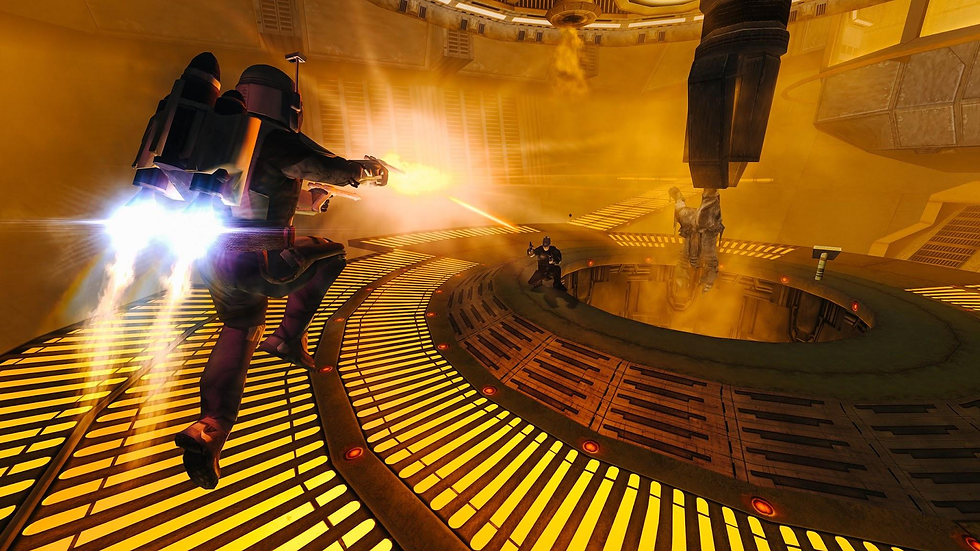
Star Wars: Bounty Hunter is refreshingly clear about Jango Fett’s profession. He tracks targets, scans suspects, takes contracts and treats violence as part of the working day. There is something close to the “professional criminal” fantasy CRIMENET identifies in HITMAN: World of Assassination. The appeal is not random chaos. It is competence. Find the target. Use the tools. Finish the job. Get paid.
Star Wars Outlaws is gentler. Kay Vess lies, steals, smuggles and works for criminal syndicates, but the game still wants us to like her. That is not a criticism. It simply shows where modern Star Wars often draws the line. The franchise is extremely comfortable with crime when the criminal has a good heart, a cute companion and reasonable objections to fascism.
The same goes for smugglers and bounty hunters across the wider history of Star Wars games. They let us step outside respectable galactic society, but usually with enough charm to ensure nobody at Lucasfilm loses sleep.
The Other Side of the Blaster
The best Star Wars villain stories in games are not necessarily the ones with the largest body count. They are the ones that make the other side mechanically coherent.
TIE Fighter makes Imperial service feel like a career. KOTOR makes cruelty a choice and, occasionally, a reward structure. The Imperial Agent turns loyalty into a problem. Bounty Hunter makes criminal work feel methodical. Outlaws shows how far the franchise is comfortable letting criminal fantasy go before it starts sanding the edges back down.
That is what games add to Star Wars. They do not merely show us villains, criminals or Imperials. They ask us to perform their routines.
And once you have spent twenty hours obeying mission briefings, checking targets, hiding information, taking contracts or choosing exactly the wrong thing to say to a frightened civilian, the galaxy looks slightly different.
Sometimes the most interesting place in Star Wars is not behind the hero. It is behind the desk of the person who stamped the hero’s arrest warrant.
About the author
Søren Ahrensborg Kamper writes about the history, design and stranger corners of Star Wars games at Star Wars: Gaming. His work focuses on the way games turn the galaxy’s familiar stories into systems players can actually inhabit.


Comments