

Mafia: The Old Country Review: Join the Mafia, Regret the Knife Budget

Quick Verdict
Mafia: The Old Country absolutely delivers the fantasy of joining a Sicilian crime family. The problem is that being a mafioso is considerably more interesting than most of the things the game actually gives you to do.
Hangar 13 has built a gorgeous, focused crime drama around Enzo Favara's rise from sulphur-mine labourer to member of the Torrisi family. The setting is magnificent, the performances sell the danger and ceremony of organised crime, and the decision to abandon bloated open-world design gives the story room to move without demanding you collect 47 Sicilian feathers because somebody in 2012 decided maps needed dandruff.
But underneath all that expensive tailoring sits a much more ordinary action game.
You sneak. You shoot. You drive. You ride horses. You stab people. Then, just when you think Sicily may finally have exhausted its supply of men willing to settle disagreements through competitive knife ownership, another bastard produces a blade.
The Old Country is a strong Mafia story trapped inside merely functional Mafia gameplay.
If what you want is a cinematic organised-crime drama with atmosphere dripping off the walls, it works. If you want a criminal sandbox where you build rackets, plan robberies, manage territory or construct your own Sicilian empire, this is emphatically not that game.
Prefer your crime with rocket launchers and considerably worse accountants? The current GTA Online Weekly Grind separates this week's genuine money-makers from Rockstar's latest attempt to pay you in pocket lint.
Becoming a Made Man, One Scripted Murder at a Time
The Old Country understands something important about Mafia that open-world games occasionally forget while throwing icons at your face: the fantasy isn't necessarily freedom. It's belonging.
Enzo Favara doesn't arrive in Sicily with a skill tree labelled ORGANIZED CRIME ENTREPRENEURSHIP and a dream of passive income. He begins at the bottom and becomes entangled with the Torrisi family, gradually taking on the responsibilities, loyalties and violence that come with joining organised crime.
That criminal identity isn't wallpaper.
Enzo performs jobs for the family. Violence is part of his occupation. Restricted areas need infiltrating. People need eliminating. Cars need driving at speeds incompatible with both contemporary road safety and the continued structural integrity of early automobiles.
This makes The Old Country genuinely successful at putting you inside a Mafia story.
What it doesn't do is give you much ownership over that criminality.
There are no meaningful systems for building your own criminal empire, running protection rackets, choosing businesses, fighting dynamically for territory or planning elaborate robberies. The story decides what kind of criminal Enzo is. You perform the role.
That distinction is crucial.
This isn't GTA with cannoli. It isn't a gangster-management simulator. It isn't PAYDAY after somebody confiscated the assault rifles and issued everyone magnificent waistcoats.
It is a linear action game about becoming a mafioso.
And within those boundaries, it knows exactly what it wants to be.
Sicily Is Doing Some Heavy Lifting
The smartest decision Hangar 13 made was committing completely to early-1900s Sicily.
The landscape isn't merely somewhere between missions. It gives the entire criminal story texture. Cars feel appropriately primitive. Horses belong here rather than existing because somebody noticed Red Dead Redemption sold several copies. Clothing, architecture and cinematography reinforce the feeling that this isn't generic Gangster Game #14 with the calendar changed.
The presentation gives the Torrisi family weight.
Organised crime works best dramatically when it feels larger than the individual gangster. There are rules, hierarchies, loyalties and consequences. Becoming part of that world should feel simultaneously seductive and deeply unhealthy, rather like joining a prestigious country club where the membership benefits include tailored clothing and being murdered behind a vineyard.
The Old Country sells that atmosphere beautifully.
Its linear structure helps.
Modern gaming has somehow convinced itself that every attractive environment must immediately be covered in activities until the map resembles a restaurant menu designed by someone experiencing a medical emergency.
The Old Country mostly refuses.
The campaign remains directed and relatively compact. You move through locations because the story has somewhere to take you, not because an NPC has misplaced seven ceremonial goats.
That won't please everyone. Sicily is beautiful enough that wanting greater freedom to explore it is completely understandable, and the later Free Ride addition gives players more room outside the campaign.
But there is something refreshing about a crime game willing to tell its story and leave.
No battle pass.
No criminal empire spreadsheet.
No 140-hour map-clearing internship.
Just organised crime, terrible life decisions and an apparently inexhaustible national reserve of knives.
Then Somebody Hands You a Gun
The trouble begins when The Old Country stops being a Mafia drama and remembers it also has to be an action game.
Its combat vocabulary is painfully conventional.
Third-person cover shooting forms a substantial part of the experience, and while it does the necessary job of allowing Enzo to turn rival criminals into employment statistics, it doesn't carry the same personality as the world surrounding it.
You have this wonderfully specific historical setting, this elaborate criminal culture, this carefully constructed atmosphere...
...and then everyone crouches behind waist-high objects.
The international language of videogames.
The shooting isn't the only offender.
Stealth is similarly basic. Restricted environments provide opportunities for distraction, sneaking and takedowns, but this isn't a criminal infiltration system that encourages elaborate improvisation. You're generally solving the situation the way the mission expects you to solve it.
Which becomes particularly noticeable because the fantasy around these mechanics is so much richer than the mechanics themselves.
You're not merely Generic Action Man infiltrating Generic Warehouse.
You're a member of a Sicilian crime family carrying out dangerous business in a world governed by loyalty, reputation and violence.
The story understands that.
The stealth system appears to have received the memo and immediately filed it somewhere nobody would ever look again.
Want organised crime with the leash removed? Head into CRIMENET's GTA Online Cayo Perico Money Guide and see what happens when “criminal career” involves actually planning a robbery instead of waiting for Sicily's next mandatory knife appointment.
Sicily Has a Knife Problem
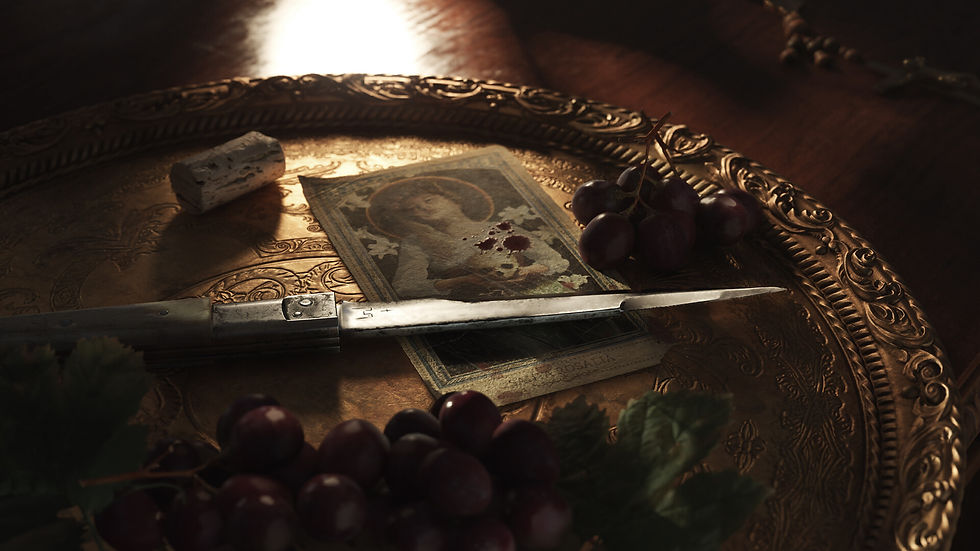
And then there are the knife fights.
Knife combat is a proper mechanic built around defending, avoiding attacks and striking back. Used carefully, it makes sense. A close, personal duel fits this world far better than having every disagreement end with Enzo producing a light machine gun from underneath his waistcoat.
The problem is frequency.
The Old Country becomes so fond of knife duels that eventually the appearance of another blade stops feeling dramatic and starts feeling contractual.
Apparently early-20th-century Sicilian conflict resolution operated according to three stages:
Disagreement.
Intense eye contact.
KNIFE.
At some point you begin wondering whether these men actually belong to rival crime families or an extremely aggressive cutlery association.
This is where repetition damages atmosphere. A mechanic introduced because it suits the setting becomes less special every time the game drags it back onto the stage demanding applause.
The knife should feel dangerous.
Eventually it feels scheduled.
The Criminal Fantasy Survives the Gameplay
And yet The Old Country's biggest strength keeps rescuing it.
You still feel embedded in organised crime.
Not because the game gives you enormous systemic freedom, but because nearly everything has been constructed around Enzo's place within the family.
That's why the game's limitations don't destroy it.
The shooting can be ordinary because the context surrounding the shooting isn't. Driving becomes part of inhabiting the period. Stealth gains meaning from why you're trespassing rather than from revolutionary AI behaviour. Even the restrictive mission structure reinforces the idea that Enzo isn't running his own criminal enterprise.
He's working for somebody else's.
That's less mechanically ambitious than a crime sandbox, but narratively it fits beautifully.
The mistake would be buying The Old Country expecting to become Don Corleone through spreadsheets and hostile acquisitions.
You're playing the employee first.
The pension scheme is appalling.
What About Performance?
The PC launch had genuine technical problems, including stuttering, long loading behaviour and hardware-specific issues. Hangar 13 subsequently released multiple updates addressing stability, performance, visual problems, save issues and other platform-specific faults.
So the current game should not simply be treated as identical to its launch build.
Nor should anyone declare every PC performance problem magically exterminated because patch notes exist.
The sensible position is simpler: The Old Country has received meaningful post-launch technical work and is in a better-supported state than it was at release, but PC performance remains something worth checking against your own hardware before buying.
Thankfully, we're no longer reviewing the version that arrived at launch with its trousers around its ankles.
Who Should Play Mafia: The Old Country?
Play it if what attracts you to Mafia is the Mafia.
The families. The ceremony. The violence. The loyalty. The historical setting. The tragedy of watching people enter criminal organisations because power looks considerably prettier before it starts demanding payment.
Its focused structure is also a blessing if the thought of another 80-hour open world causes your soul to quietly leave through your nostrils.
But if your dream crime game is about freedom, systems and criminal entrepreneurship, look elsewhere.
You aren't building an empire here.
You're inhabiting a story.
For players who want elaborate heists, player-designed schemes or a dynamic criminal economy, the title promises more than the mechanics deliver simply because the word Mafia carries certain fantasies around with it.
The Old Country is interested in a different fantasy.
Not becoming the boss.
Becoming one of his men.

This Week in CRIME is CRIMENET's underworld briefing: criminal games worth your time, GTA money worth stealing, fresh villains and horrors, and industry catastrophes requiring immediate public humiliation. Get the briefing, and if CRIMENET has saved you from buying something dreadful, there’s always Ko-fi.
Verdict
Mafia: The Old Country works because its criminal world is far more memorable than its action mechanics.
Hangar 13 has created a beautiful, focused Mafia story with a strong sense of place, convincing performances and an organised-crime atmosphere that understands why people remain fascinated by these families a century later.
Then it fills that world with competent cover shooting, simple stealth and enough knife fights to make a dishwasher nervous.
That stops it from being the definitive Mafia game it occasionally looks capable of becoming.
But it doesn't stop it being worth playing.
Because when The Old Country is telling its story, letting Sicily breathe and pulling Enzo deeper into the Torrisi family, the fantasy works. You're not a tourist watching gangsters through reinforced glass. You're inside the organisation, doing its dirty work and discovering exactly what membership costs.
The Old Country makes being in the Mafia considerably better than actually working for the Mafia.
Which, thinking about it, may be the most historically accurate thing in the entire game.


Comments